About Us

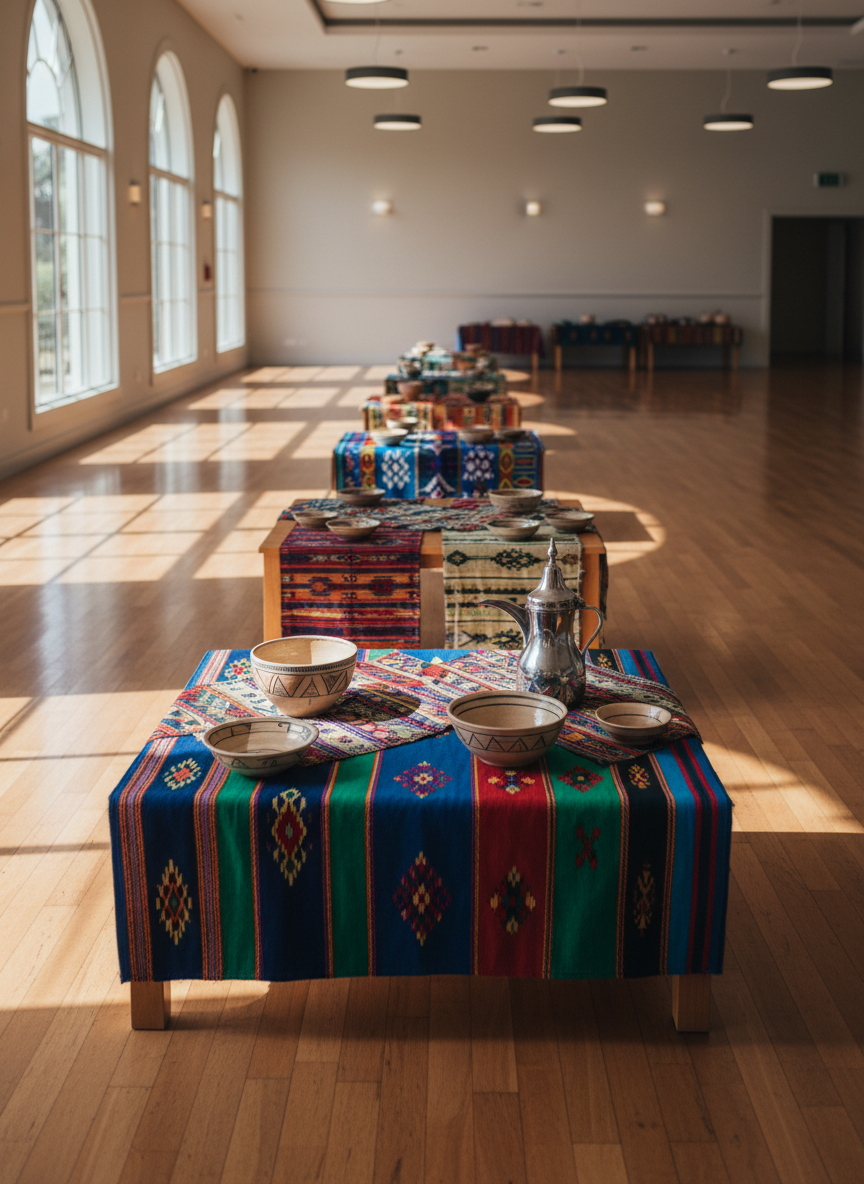
A wide, polished hardwood floor in a bright community center, featuring an arrangement of colorful woven mats and intricately patterned traditional Djiboutian textiles draped over low display tables. Decorative ceramic bowls with subtle geometric motifs and a gleaming silver coffee pot rest atop the cloths, suggesting shared culture and hospitality. Sunlight from high side windows washes the scene in warm, even light, casting soft, elongated shadows. Shot from a slightly elevated angle using the rule of thirds, the foreground textiles are in crisp focus while the background of neutral-toned walls and discreet modern lighting softly fades. The photographic image feels vibrant yet orderly, celebrating cultural heritage in a refined, professional setting appropriate for an Australian community council event.

About Us

The Djiboutian Community Council of Australia (DCCA) was set up as the leading non-profit incorporated association to the Djiboutian citizens and people of Djiboutian origin but living all over the Australian law. The DCCA represents the Djiboutian diaspora and operates as the official representative body to provide local, state, and community-based leadership, advocacy, and activities.
The DCCA is a non-partisan, nonpolitical, and community-based organization. It does not depend on any political party or religious entity hence representing all the members through an inclusive, equal basis. With a formal constitution, the Council is bound to the Australian legislative and regulatory stipulations, which govern non-governmental and incorporated association, which is why it operates lawfully, is financially accountable, and ethically administered.
Based on the policies of transparency, democratic accountability, inclusiveness, and social justice, the DCCA embraces the idea of member-based decision-making, which is guided with evident frameworks. These processes ensure representation, accountability and good leadership and as such, form the basis of credibility and trustworthiness of the Council in Djiboutian society and the Australian institutional framework at large.

The main aims of the DCCA include ensuring the collective interests of the Djiboutian community; pursuing social cohesion, civic engagement; the endorsement of settlement and wellbeing, and community-building outcomes; and preserving per Djiboutian culture, language, and heritage. The Council also strives to enhance intergenerational interaction and the equal involvement of youngers, women, or old people in the life of the Community.
In its interaction with the government agencies, non-government organisations and service providers, the DCCA promotes policies, programmes, and services that must meet the needs and priorities of the Djiboutian Australians. It aids in exchange of information, community consultation and capacity building projects to improve access to education, job, health, and social services.
The DCCA, acting as a representative, governance, and advocacy area, is the main coordination organ of the Djiboutian community in Australia, thus, playing the role of ensuring the efficiency of the community representation as well as the multicultural framework of the country in general.

Learn how we connect Djiboutians, preserve culture, and support strong, thriving communities across Australia.

About

Our Story and Shared Vision

The Djibouti Community Council of Australia unites Djiboutians, honours our heritage, and supports families to thrive. We build bridges with wider Australian society through cultural events, advocacy, and practical assistance for new arrivals and long‑standing community members.
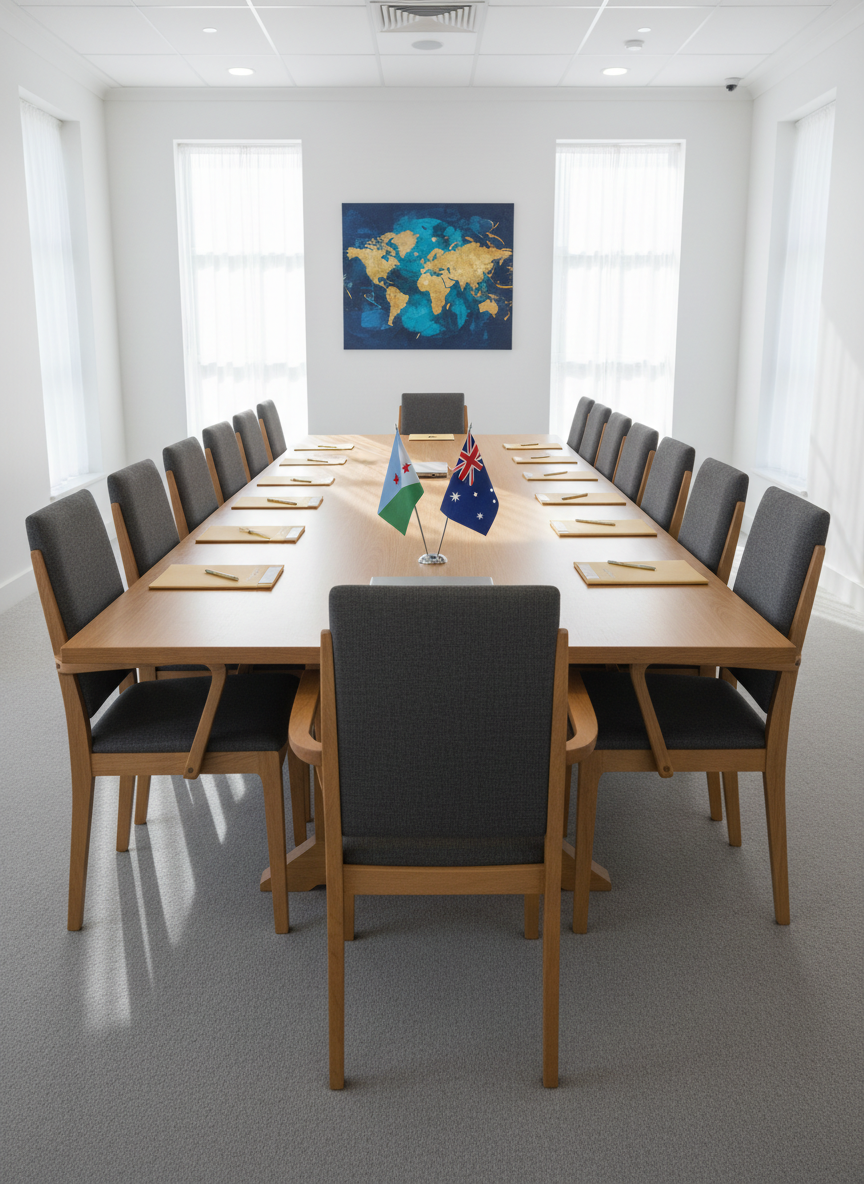
A large, elegant conference table crafted from smooth light wood, surrounded by high-backed chairs with dark fabric upholstery, arranged in a modern community hall. On the tabletop, small Djiboutian and Australian flags stand in polished metal bases beside neatly stacked folders and a sleek laptop, symbolizing partnership and organization. Soft, diffused daylight enters through tall windows with sheer white curtains, creating gentle reflections on the wood and subtle shadows beneath the chairs. Photographed at eye level with sharp focus throughout, the room feels professional yet welcoming, with clean white walls and a glimpse of an abstract map artwork in the background. The atmosphere conveys structured community leadership, unity, and purposeful collaboration in a photographic realism style.

Our Leaders

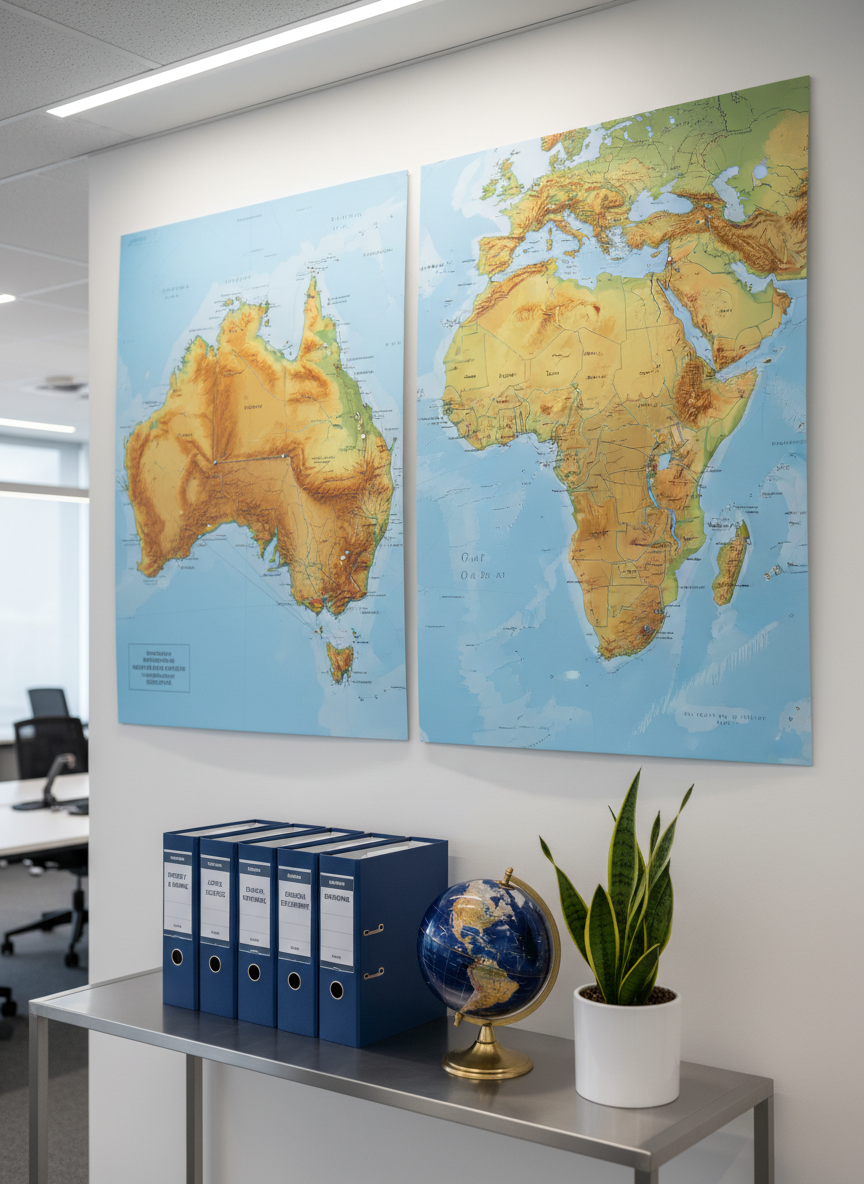
An immaculately maintained map corner inside a modern office, featuring a large, wall-mounted physical map of Australia and the Horn of Africa side by side. A sleek metal-framed shelf beneath holds a neat row of labeled binders, a globe with a glossy surface, and a small plant in a white ceramic pot. Cool, balanced overhead lighting combines with soft daylight from an unseen window to create gentle highlights on the map surfaces and the globe’s oceans. Captured from a three-quarter angle with moderate depth of field, the focus is on the juxtaposition of regions, suggesting connection between Djibouti and Australia. The composition is clean and uncluttered, conveying strategic planning, diaspora links, and professional coordination in a realistic photographic style.

Aarav Sharma

A wide, polished hardwood floor in a bright community center, featuring an arrangement of colorful woven mats and intricately patterned traditional Djiboutian textiles draped over low display tables. Decorative ceramic bowls with subtle geometric motifs and a gleaming silver coffee pot rest atop the cloths, suggesting shared culture and hospitality. Sunlight from high side windows washes the scene in warm, even light, casting soft, elongated shadows. Shot from a slightly elevated angle using the rule of thirds, the foreground textiles are in crisp focus while the background of neutral-toned walls and discreet modern lighting softly fades. The photographic image feels vibrant yet orderly, celebrating cultural heritage in a refined, professional setting appropriate for an Australian community council event.

Mateo García

A large, elegant conference table crafted from smooth light wood, surrounded by high-backed chairs with dark fabric upholstery, arranged in a modern community hall. On the tabletop, small Djiboutian and Australian flags stand in polished metal bases beside neatly stacked folders and a sleek laptop, symbolizing partnership and organization. Soft, diffused daylight enters through tall windows with sheer white curtains, creating gentle reflections on the wood and subtle shadows beneath the chairs. Photographed at eye level with sharp focus throughout, the room feels professional yet welcoming, with clean white walls and a glimpse of an abstract map artwork in the background. The atmosphere conveys structured community leadership, unity, and purposeful collaboration in a photographic realism style.

Zuri Ndlovu

An immaculately maintained map corner inside a modern office, featuring a large, wall-mounted physical map of Australia and the Horn of Africa side by side. A sleek metal-framed shelf beneath holds a neat row of labeled binders, a globe with a glossy surface, and a small plant in a white ceramic pot. Cool, balanced overhead lighting combines with soft daylight from an unseen window to create gentle highlights on the map surfaces and the globe’s oceans. Captured from a three-quarter angle with moderate depth of field, the focus is on the juxtaposition of regions, suggesting connection between Djibouti and Australia. The composition is clean and uncluttered, conveying strategic planning, diaspora links, and professional coordination in a realistic photographic style.
A wide, polished hardwood floor in a bright community center, featuring an arrangement of colorful woven mats and intricately patterned traditional Djiboutian textiles draped over low display tables. Decorative ceramic bowls with subtle geometric motifs and a gleaming silver coffee pot rest atop the cloths, suggesting shared culture and hospitality. Sunlight from high side windows washes the scene in warm, even light, casting soft, elongated shadows. Shot from a slightly elevated angle using the rule of thirds, the foreground textiles are in crisp focus while the background of neutral-toned walls and discreet modern lighting softly fades. The photographic image feels vibrant yet orderly, celebrating cultural heritage in a refined, professional setting appropriate for an Australian community council event.
A large, elegant conference table crafted from smooth light wood, surrounded by high-backed chairs with dark fabric upholstery, arranged in a modern community hall. On the tabletop, small Djiboutian and Australian flags stand in polished metal bases beside neatly stacked folders and a sleek laptop, symbolizing partnership and organization. Soft, diffused daylight enters through tall windows with sheer white curtains, creating gentle reflections on the wood and subtle shadows beneath the chairs. Photographed at eye level with sharp focus throughout, the room feels professional yet welcoming, with clean white walls and a glimpse of an abstract map artwork in the background. The atmosphere conveys structured community leadership, unity, and purposeful collaboration in a photographic realism style.